Will This Combine Part Fit My Machine? 7 Checks to Make Before Ordering
Use seven checks for combine-part fitment, including OEM number, model, serial, dimensions, installation position, and package contents.
Quick Answer
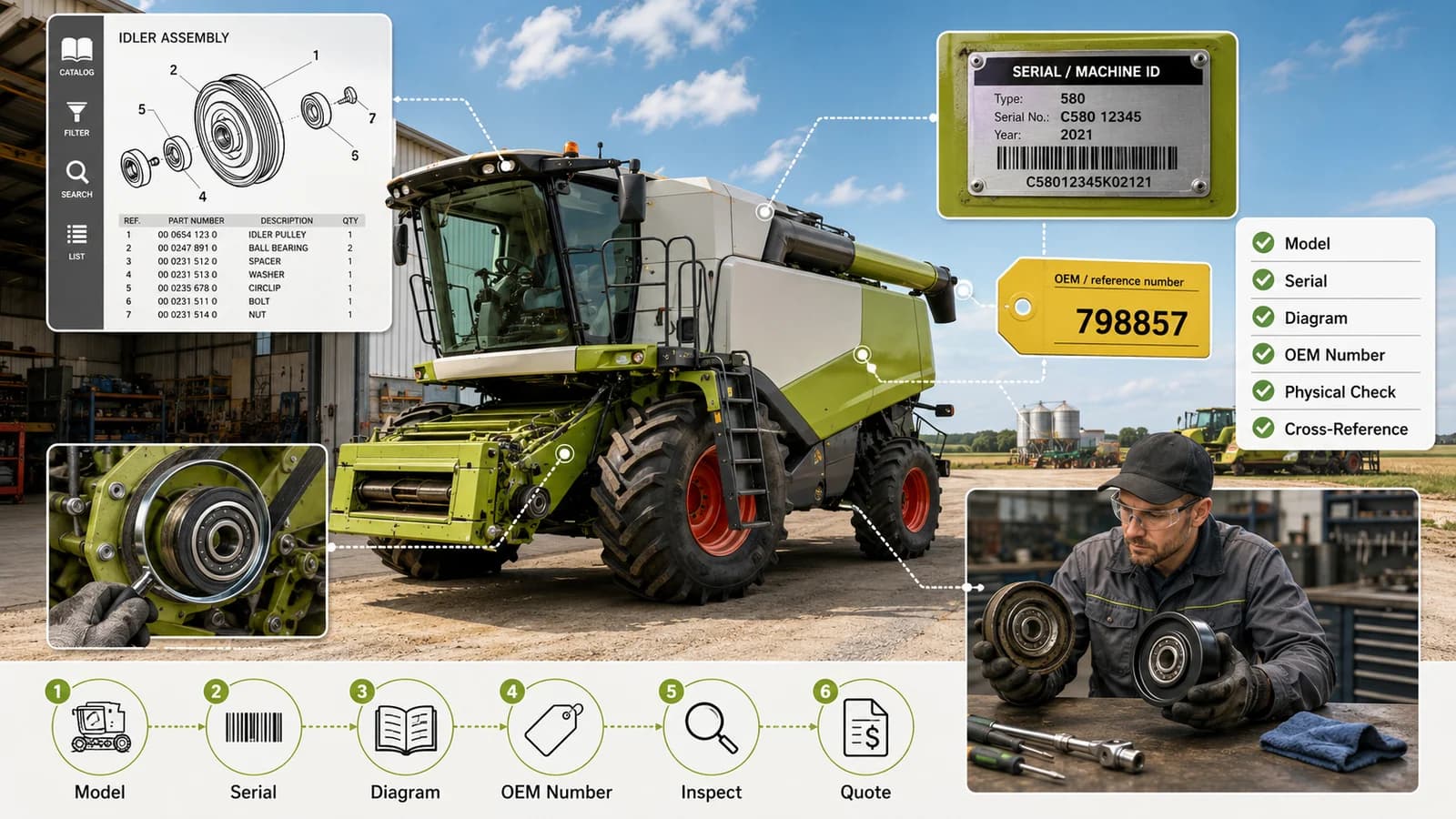
To confirm whether a combine part fits your machine, check these seven things:
- OEM part number
- Exact combine model
- Machine serial number
- Part location and orientation
- Physical dimensions
- Technical specification
- Product photo and included components
If all seven agree, the chance of ordering the wrong part drops dramatically.
“Fits My Model” Is Not Always Enough
One of the most common online parts questions is:
“Will this fit my machine?”
A buyer sees a listing for a John Deere S680, Case IH 2388, or New Holland CR combine and assumes the model match answers the question.
It may not.
Manufacturers modify machines during their production lives.
The part used before a certain serial number can differ from the part used after it.
Even John Deere's official S-Series information separates certain replacement components by serial-number range.
Aftermarket listings also regularly identify fitment as before serial number or after serial number rather than by model alone.
This is why proper fitment is an identification process, not a visual guess.
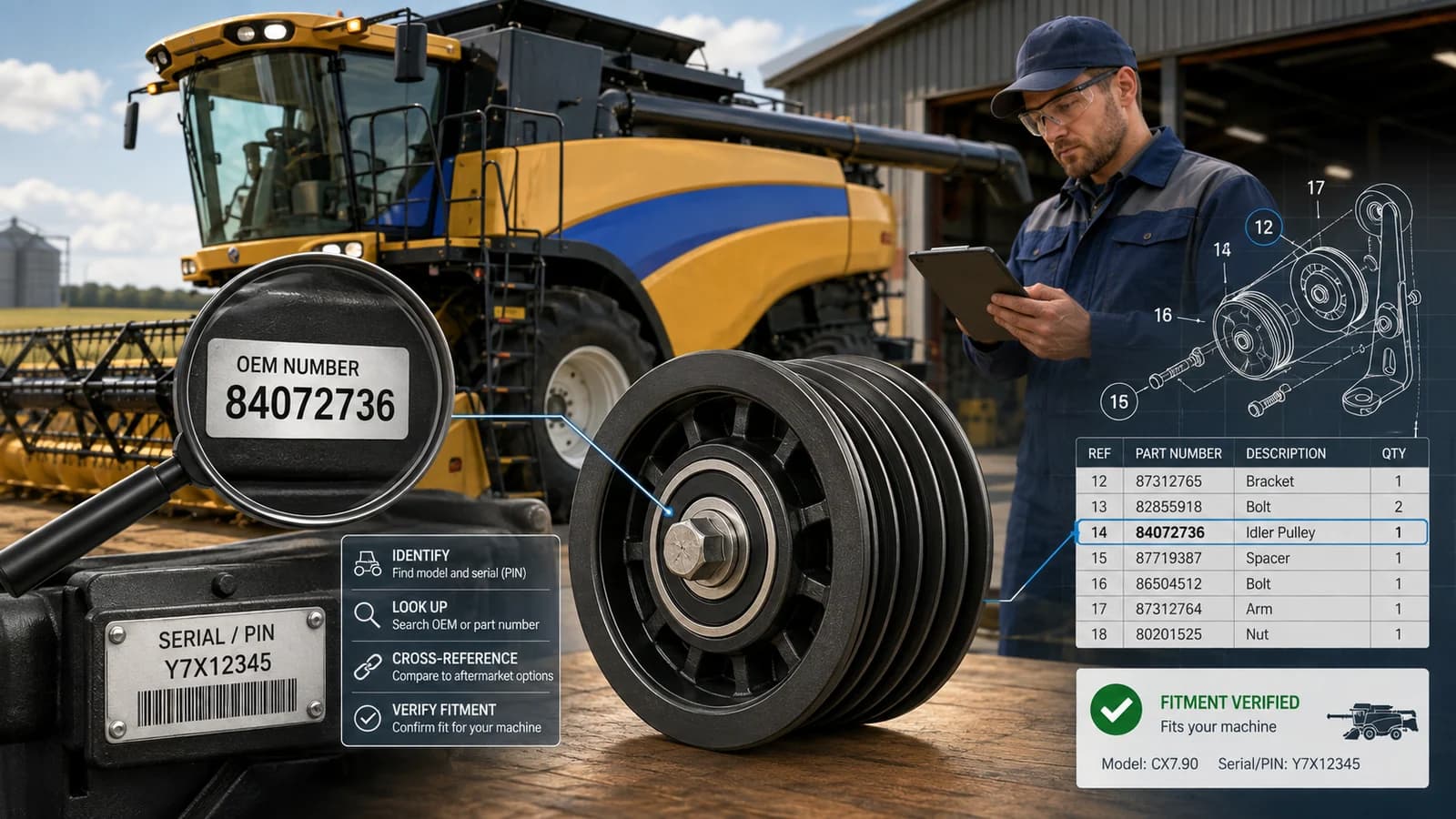
Check 1: Start With the OEM Part Number
The OEM number is usually the strongest single identifier.
If your old part, manual, dealer invoice, or OEM catalog gives you a reference such as:
recorded OEM number
search that number first.
A strong replacement listing should clearly say which OEM reference it replaces.
But remember:
Matching the OEM number is step one—not always the only step.
Check 2: Confirm the Exact Combine Model
Write the complete model.
Not:
John Deere combine
Not:
S Series
But:
John Deere S680
or:
John Deere 9770 STS
Likewise:
Case IH 8230
rather than:
Case combine
Agricultural parts catalogs contain enormous numbers of components that may look similar across models.
Precision saves time.
Check 3: Check the Serial Number
This is where many incorrect orders happen.
Consider a simplified example:
Part A: Fits model X up to serial number 100000
Part B: Fits model X from serial number 100001
If you search only the model, both parts may appear.
Only one may fit your machine.
That is why you should keep a photograph of your combine's serial/PIN plate on your phone.
It is one of the simplest ways to make future parts ordering easier.
Check 4: Confirm Where the Part Is Installed
Some components vary according to location.
Examples:
- upper vs. lower
- front vs. rear
- drive vs. driven
- left vs. right
- clean-grain vs. tailings system
- feederhouse vs. header
- inner vs. outer
A product photograph may not make this obvious.
When a listing specifies left or right, determine orientation from the machine manufacturer's convention rather than from the way a product happens to be photographed.
When in doubt, send a photo of the installed location.
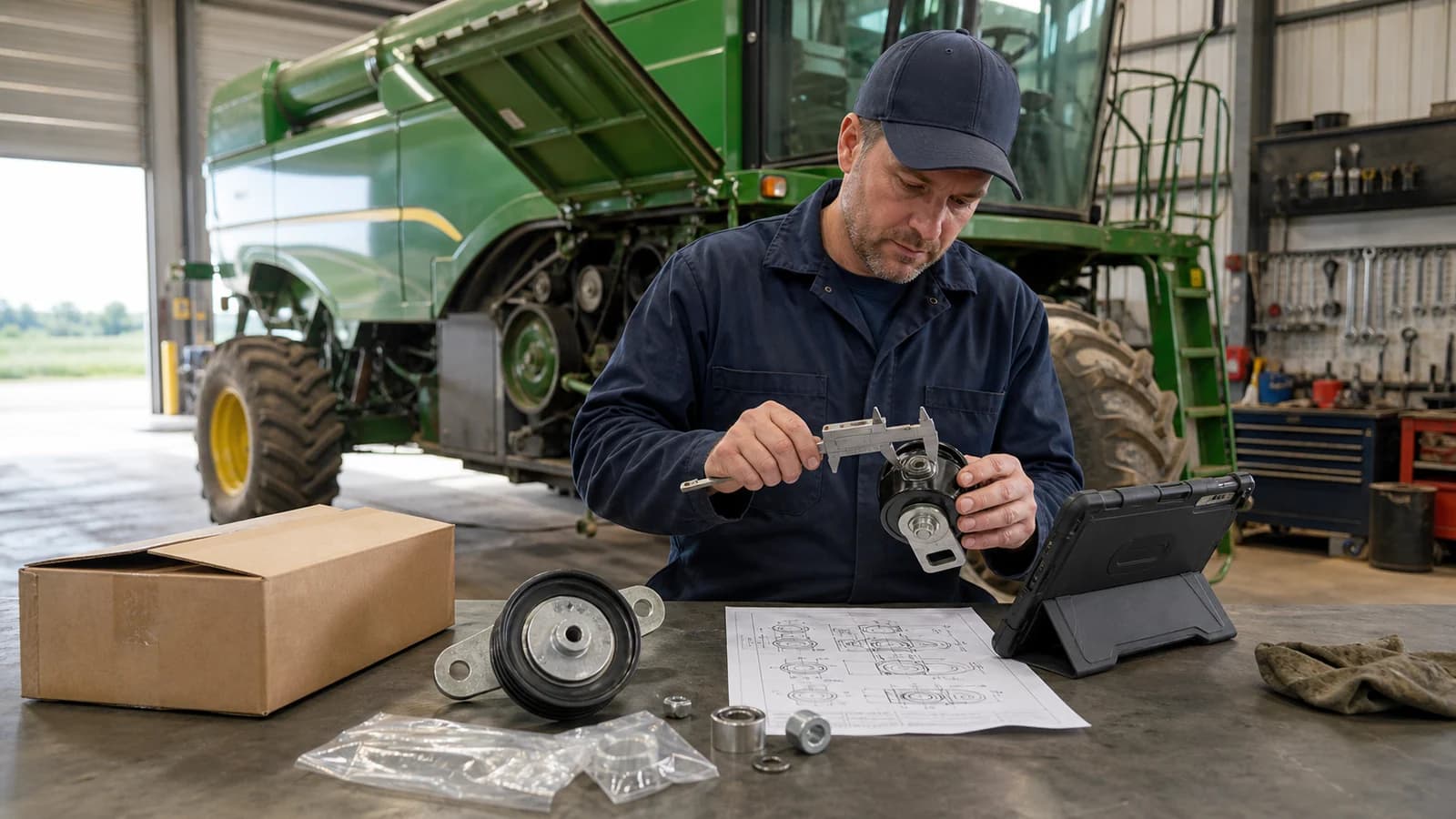
Check 5: Compare Critical Dimensions
This is one of the most powerful fitment checks for mechanical parts.
You do not need to measure every surface.
Measure the features that determine whether the part can physically function.
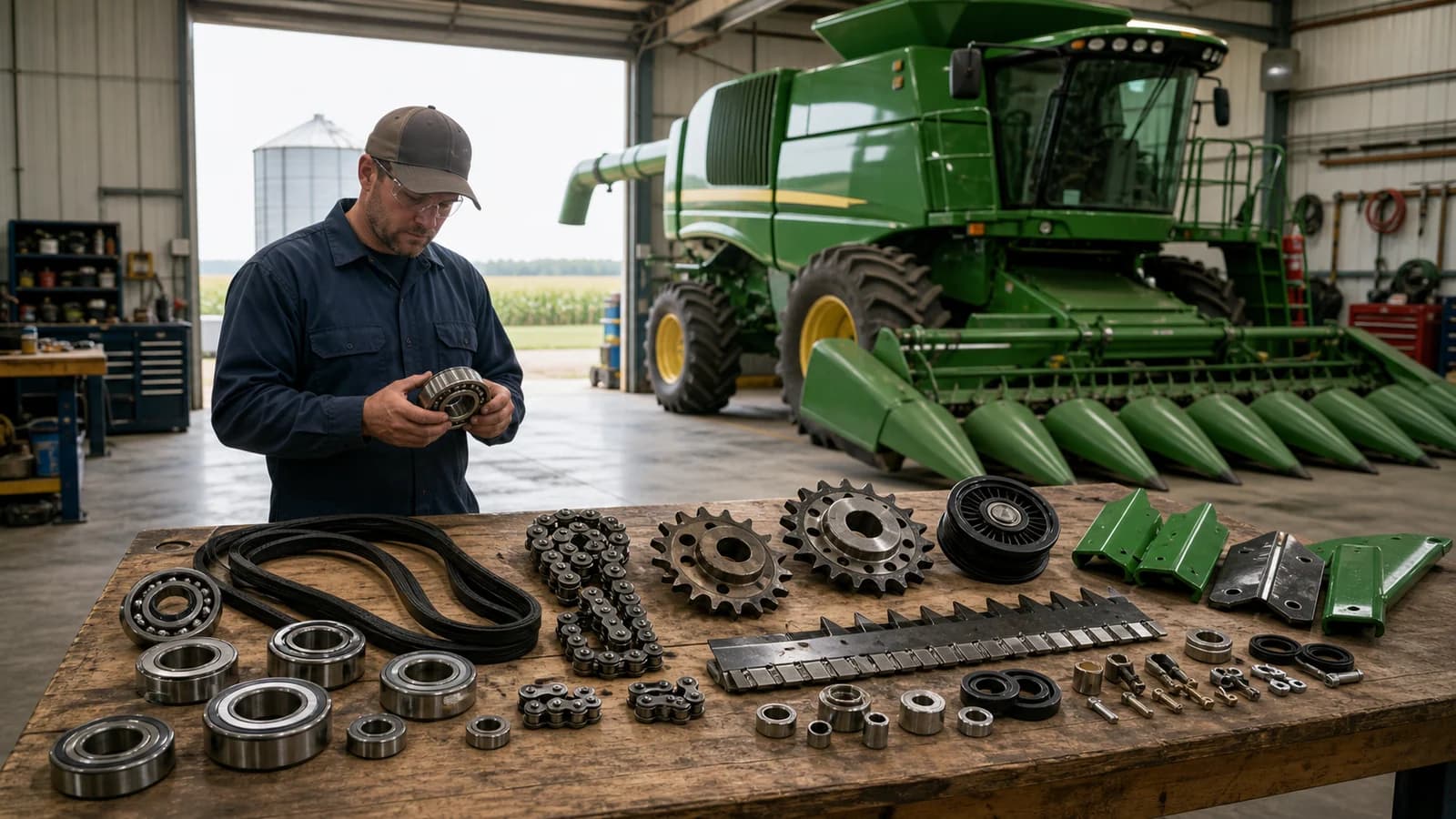
For sprockets:
- tooth count
- chain size/pitch
- bore
- keyway
- hub width
- offset
For bearings:
- shaft/bore diameter
- outside diameter
- width
- locking style
- flange/housing configuration
For pulleys:
- outside diameter
- bore
- groove count
- belt type
- hub/offset
For bushings:
- ID
- OD
- length
For shafts:
- overall length
- shaft diameter
- spline count
- keyway
- thread
For seals:
- shaft diameter
- housing diameter
- width/type
A five-minute measurement can prevent a multi-day return.
Check 6: Compare the Specification, Not Just the Shape
Imagine two sprockets.
Both are black.
Both have approximately the same diameter.
Both have the same bolt pattern.
One has 14 teeth.
The other has 15.
They are not the same part.
The same principle applies to:
- spline counts
- thread pitches
- electrical connectors
- voltage
- chain sizes
- bearing locking systems
- belt widths
- materials
“Looks right” is not the same as “is right.”
Check 7: Study the Product Photograph and Package Contents
Use the image as a verification tool.
Compare:
- mounting holes;
- casting shape;
- connector;
- shoulder;
- flange;
- keyway;
- brackets;
- hardware.
Also verify quantity.
A listing may be:
1 knife section
while another is:
25 knife sections
A bearing assembly may or may not include the housing.
A repair kit may or may not contain fasteners.
The headline price means little until you know what is included.
What If the Seller's Fitment List and My OEM Number Disagree?
Stop before ordering.
This is exactly when you should contact the seller.
Send:
Machine: John Deere S680
Serial Number: recorded value
OEM Number: recorded OEM number
Listing SKU: recorded value
Then ask:
“Can you confirm this fits my machine?”
If possible, attach photographs.
Do not choose whichever piece of information you prefer.
Resolve the conflict first.
What If My OEM Number Appears in the Listing but My Model Does Not?
Ask the supplier.
There are several possibilities:
- The product may fit, but the seller's application list is incomplete.
- The OEM number may have been used in multiple applications.
- The listing may contain incomplete cross-reference data.
- Your number may refer to a related assembly rather than the exact service part.
This is why both reference number and machine fitment should be considered.
What If My Model Is Listed but My OEM Number Is Different?
Again, verify.
Do not assume the listing is wrong, and do not assume it is right.
Your original number might have been replaced by a later reference.
Or the combine may have different parts depending on serial number.
Or the listing may simply be inaccurate.
A good seller should be able to explain the cross-reference.
Can the Same Part Fit John Deere, Case IH, or New Holland Equipment?
In some categories, cross-brand component commonality is possible, particularly where a common component manufacturer supplies similar bearings, seals, electrical parts, or other assemblies.
But never assume cross-brand compatibility.
Verify the published OEM references and technical specification.
Why Online Marketplace Fitment Is Harder Than It Looks
On eBay, Amazon, and independent parts websites, sellers need to fit a lot of technical information into a limited product listing.
That creates several common problems:
- incomplete model lists;
- missing serial-number notes;
- copied fitment data;
- outdated OEM numbers;
- unclear package quantities;
- generic product photographs.
For a low-value consumer product this may be annoying.
For a combine stopped during harvest, it can become expensive.
The buyer and supplier should therefore work from the same technical identifiers.
The Best Message to Send Before Ordering
Instead of asking:
“Does this fit?”
send this:
Machine: Case IH 8230
Serial Number: recorded value
OEM Number: recorded value
Part Needed: feederhouse idler
Quantity: 2
Photo: attached
Or, if the OEM number is unknown:
Machine: John Deere S670
Serial Number: recorded value
Part Location: upper clean-grain elevator drive
Measurements: attached
Photos: attached
You are much more likely to receive a useful answer.
Which Information Matters Most?
If you have everything, excellent.
If not, prioritize this order:
Best case
OEM number + model + serial number
Very useful
Model + serial number + photos
Useful for many mechanical parts
Model + dimensions + photos
Weak
Photo only
Very weak
“It came off a green combine.”
Fitment Checklist Before Checkout
Use this every time you buy a combine replacement part online.
| Check | Confirmed? |
|---|---|
| Correct OEM/cross-reference number | □ |
| Exact machine model | □ |
| Correct serial-number range | □ |
| Correct installation position | □ |
| Critical dimensions match | □ |
| Teeth/splines/grooves/specification match | □ |
| Electrical connector matches if applicable | □ |
| Package quantity confirmed | □ |
| Included hardware/components confirmed | □ |
| Product photo appears consistent | □ |
If one of the first six boxes remains uncertain, verify before purchasing.
Frequently Asked Questions
Can I order by combine model only?
Sometimes, especially for components that never changed during production. But OEM number and serial number provide much stronger confirmation.
Why does a seller ask for my serial number?
Because manufacturers may change components during a model's production run. The serial number helps identify which configuration you own.
Is a matching OEM number enough?
It is strong evidence, but checking listed machine fitment and any serial-number restrictions is still recommended.
Should I measure an old part if I already know the OEM number?
For common, well-documented parts it may not be necessary. For uncertain cross-references or older machines, dimensions provide an excellent extra check.
Can I send a photo to identify a combine part?
Yes. Photos are particularly useful when paired with the model, serial number, location, and dimensions.
Continue your parts research
For Deere equipment, use the John Deere OEM-number cross-reference workflow.
For Case IH equipment, use the Case IH model, serial, and OEM fitment workflow.
When supply channel is part of the decision, compare OEM and aftermarket agricultural parts.
Send unresolved evidence in a replacement-part quote request before placing an order.
Bottom Line
The best way to avoid buying the wrong combine part is to stop thinking in terms of:
“It looks like mine.”
Instead, think:
**OEM Reference
-
Model
-
Serial Number
-
Specification
-
Physical Verification**
If you are uncertain, verify before ordering.
A short fitment review is usually less costly than receiving the wrong part when the combine needs to be running.
Official references
John Deere, Case IH, New Holland, CLAAS, and their model names are trademarks of their respective owners. FieldFit Parts is not affiliated with or endorsed by those manufacturers. OEM numbers and model names are used for identification and compatibility reference only. Always confirm the current official catalog record, serial applicability, and the machine's actual configuration before ordering or installing a replacement part.
Continue to the catalog
Related Combine Parts Catalogs
Move from lookup guidance to published brand-specific parts. Search by the complete OEM or reference number and confirm the machine details before ordering.
John Deere Combine Parts
Browse published John Deere combine replacement parts by OEM or reference number, then verify model and serial details.
Browse partsPublished catalogCase IH Combine Parts
Browse published Case IH combine replacement parts by OEM or reference number, then verify model and serial details.
Browse partsPublished catalogCLAAS Combine Parts
Browse published CLAAS combine replacement parts by OEM or reference number, then verify model and serial details.
Browse partsPublished catalogNew Holland Combine Parts
Browse published New Holland combine replacement parts by OEM or reference number, then verify model and serial details.
Browse partsRelated Parts
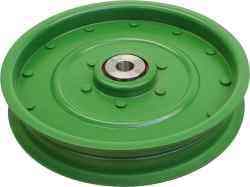
JD5001
Idler Pulley for John Deere - Replaces OEM AH94450
Aftermarket replacement for John Deere OEM AH94450. Review listed machine fitment and request a quote from FieldFit Parts.

FFP-JD-000017
Bearing for John Deere - Replaces OEM JD7689
Aftermarket replacement for John Deere OEM JD7689. Review listed machine fitment and request a quote from FieldFit Parts.
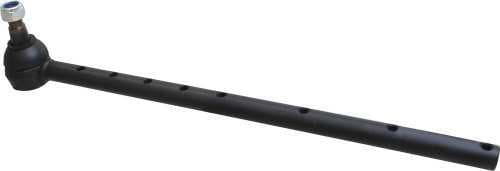
FFP-JD-000016
2WD Steering Tie Rod Assembly for John Deere - Replaces OEM AH231494
Aftermarket replacement for John Deere OEM AH231494. Review listed machine fitment and request a quote from FieldFit Parts.
FFP-JD-000021
Recycling Valve for John Deere - Replaces OEM DZ111267
Aftermarket replacement for John Deere OEM DZ111267. Review listed machine fitment and request a quote from FieldFit Parts.
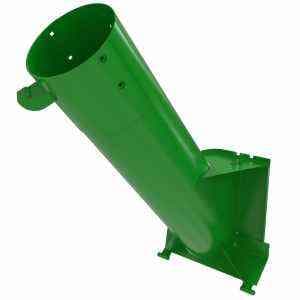
FFP-JD-000020
Auger Tube for John Deere - Replaces OEM AH219093
Aftermarket replacement for John Deere OEM AH219093. Review listed machine fitment and request a quote from FieldFit Parts.

FFP-JD-000019
Roller Chain for John Deere - Replaces OEM AXE54619
Aftermarket replacement for John Deere OEM AXE54619. Review listed machine fitment and request a quote from FieldFit Parts.
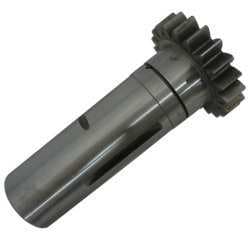
JD5146
Gears for John Deere - Replaces OEM H207015
Aftermarket replacement for John Deere OEM H207015. Review listed machine fitment and request a quote from FieldFit Parts.