How Do I Find the Correct OEM Part Number for My John Deere Combine?
Use model, PIN, catalog diagrams, OEM numbers, and physical checks to find the correct John Deere combine replacement part.
Quick Answer
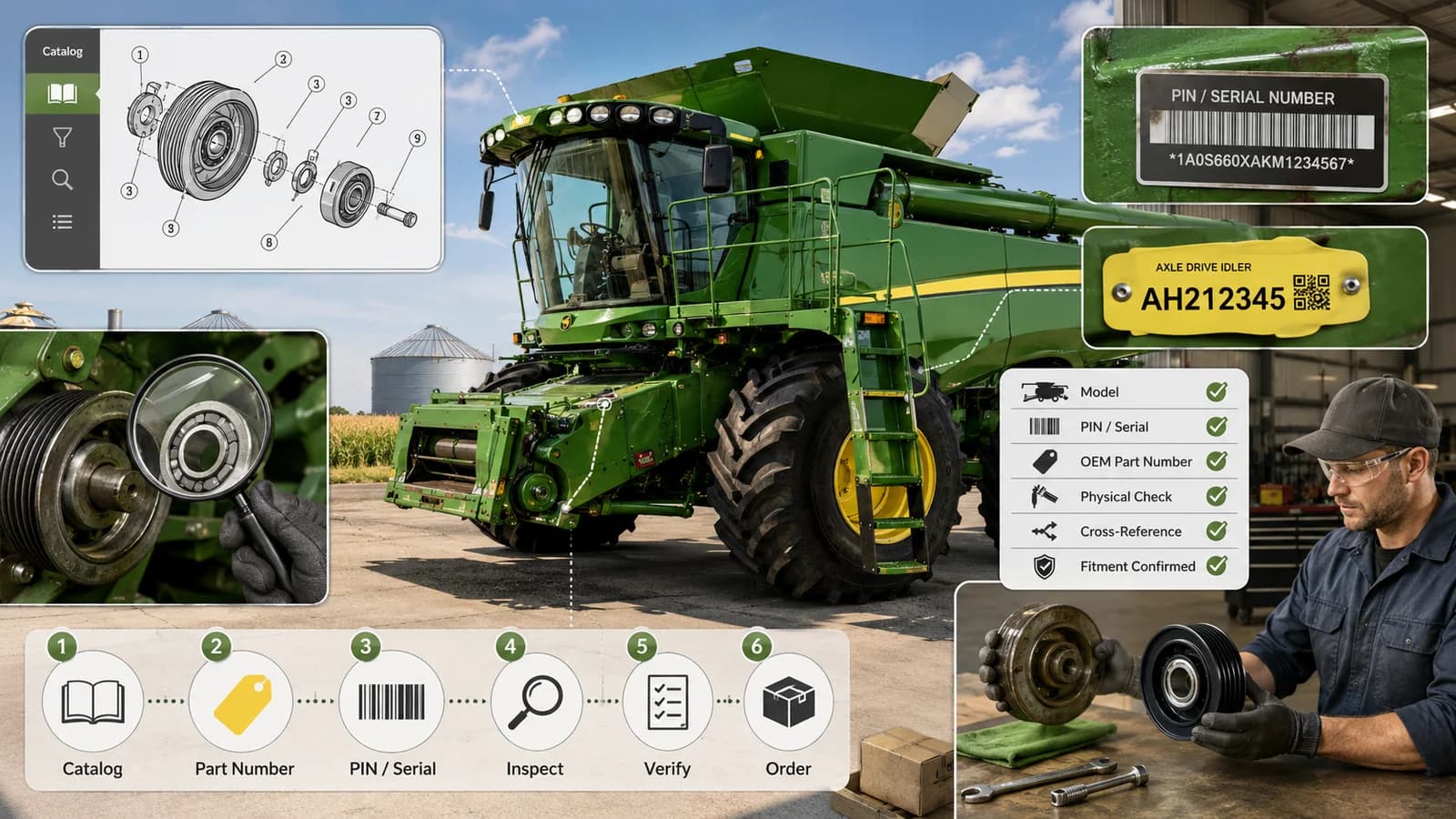
The safest way to identify a John Deere combine part is to use both the exact machine model and serial number, locate the component in the correct parts catalog, record the OEM part number, and then confirm the part's physical details and application before ordering.
Do not rely on the combine model alone.
Two machines carrying the same model designation can use different components because of production changes, serial-number breaks, factory options, regional configurations, or later updates.
That matters whether you are buying a genuine John Deere part or an aftermarket replacement.
Why Isn't the Combine Model Enough?
A common buyer question sounds simple:
“I have a John Deere S680. Will this part fit?”
Sometimes the answer is obvious.
Sometimes it is not.
John Deere's own parts system separates some combine catalogs by serial-number range and configuration. For example, its S670 parts lookup lists multiple catalogs covering different serial-number ranges and regional versions rather than treating every S670 as identical.
John Deere also publishes separate replacement-parts information for different S-Series serial-number ranges, with some component numbers changing according to serial number and configuration.
That is why a listing that says only:
“Fits John Deere S670 / S680 / S690”
does not always provide enough information to make a confident purchase.
A professional fitment check starts with the OEM reference, but it should not always end there.
Step 1: Identify the Exact Combine Model
Start with the complete model designation.
Examples include:
- John Deere 9670 STS
- John Deere 9770 STS
- John Deere S660
- John Deere S670
- John Deere S680
- John Deere S690
- John Deere S760
- John Deere S770
- John Deere S780
- John Deere S790
For a model-specific starting catalog, see John Deere S660 aftermarket combine parts. It groups supplier-listed S660 candidates, but the OEM number, PIN or serial details, illustrated assembly, and physical checks still decide final fitment.
Do not assume that two machines in the same family automatically share every component.
An S670 and S680 may share many parts, but they also have different components. Even two S670 combines may have differences depending on serial number.
Step 2: Record the Machine Serial Number or PIN
This is one of the most useful pieces of information you can provide when asking a parts supplier to confirm fitment.
John Deere's online parts system allows equipment identification by serial number, while Case IH uses the same general approach in its own parts catalog: buyers can search by serial number or model.
Why does the serial number matter?
Manufacturers make production changes.
A bearing housing may change.
A shaft diameter may change.
A mounting pattern may change.
A pulley may use a different number of grooves.
A sensor connector may be revised.
A later machine may use a new assembly that looks almost identical to the earlier version.
These transitions are commonly called serial-number breaks.
Step 3: Find the Part in the Correct Parts Diagram
Once you have the model and serial number, identify the system where the failed or worn part is located.
For example:
- Header
- Feederhouse
- Threshing system
- Separator
- Cleaning shoe
- Clean-grain elevator
- Tailings elevator
- Unloading system
- Straw chopper
- Final drive
- Hydraulic system
- Engine
- Cab
- Electrical system
The illustrated parts diagram is often more reliable than trying to identify a component from its appearance alone.
A diagram tells you where the part sits in the assembly and helps distinguish between similar-looking components.
This becomes especially important with:
- sprockets
- idlers
- bearings
- bushings
- shafts
- pulleys
- seals
- guards
- brackets
- sensors
The correct diagram position can prevent an expensive guessing game.
Step 4: Find the OEM Part Number
Once you locate the component, record the OEM number exactly.
A John Deere part number may look something like:
AH123456
AXE12345
H123456
HXE12345
RE123456
The exact format varies.
For aftermarket purchasing, this OEM number becomes one of your strongest search keys.
Instead of searching only:
John Deere S680 bearing
try searching:
AH123456 replacement
or:
John Deere AH123456
or:
AH123456 S680
A good aftermarket catalog should make the OEM reference easy to find rather than burying it in a long description.
Step 5: Check Whether the Number Has Multiple Cross-References
This is another common source of confusion.
One replacement part can sometimes cross-reference to more than one OEM number.
That can happen because:
- an earlier part number was replaced by a later number;
- the same component was used in several equipment families;
- related OEM catalogs used different references;
- an aftermarket manufacturer consolidated several compatible references.
This does not mean every part carrying one of those numbers is automatically interchangeable in every application.
You still need to check machine fitment.
For example, aftermarket agricultural suppliers commonly publish both OEM reference numbers and a list of compatible machines, then tell buyers to verify both before ordering.
That is good practice.
What If the OEM Number Is Printed on the Old Part?
Use it.
But do not treat it as unquestionable proof.
The component currently installed on your combine may itself be:
- an earlier replacement;
- an aftermarket component;
- part of a field-installed update;
- an assembly from another compatible machine;
- a superseded version.
Use the number on the old part as one piece of evidence.
Then cross-check it against:
Model + Serial Number + Parts Diagram + Physical Configuration
That combination is much safer.
What If I Cannot Find Any Number on the Old Part?
This happens frequently with wear parts.
Paint disappears.
Labels fall off.
Casting numbers may not be orderable part numbers.
Components may be badly worn.
In that situation, send the supplier as much information as possible.
At minimum:
- Machine brand
- Exact model
- Serial number
- Part location
- Clear photos
- Approximate dimensions
For some components you should also provide:
- bore diameter
- shaft diameter
- number of teeth
- spline count
- chain size
- pulley diameter
- groove count
- bolt-hole spacing
- thread size
- connector type
- left- or right-hand position
A photo with a ruler or caliper in the image can be much more useful than a description such as:
“It is the little sprocket behind the feederhouse.”
Can One OEM Number Fit Several John Deere Combine Models?
Yes.
This is very common and is one reason OEM-number searching works so well.
A bearing, seal, sprocket, sensor, bushing, or other component may appear on several models.
In some cases a component may even be used on different types of John Deere equipment.
That does not reduce the importance of fitment verification.
It makes it more important.
The correct question is not:
“Does this part fit a John Deere combine?”
It is:
“Does this specific replacement fit my model, serial-number range, and application?”
What Does “Replaces OEM Part Number” Mean?
On an aftermarket listing, wording such as:
Replaces John Deere OEM Part Number recorded OEM number
normally means the seller is identifying its product as a replacement intended for applications associated with that OEM reference.
It does not mean the replacement part was manufactured by John Deere.
OEM numbers are widely used in the agricultural aftermarket as reference and cross-reference information. Major aftermarket suppliers commonly show the OEM reference together with machine fitment data.
When buying, check both.
Why Can Two Parts Look Identical but Still Be Different?
Small differences can matter.
Consider two sprockets that look nearly identical in a photograph.
They may differ by:
- one tooth;
- bore size;
- keyway dimensions;
- offset;
- hub width;
- chain pitch.
Two pulleys may differ by groove count or diameter.
Two bearings may have the same outside diameter but different locking systems.
Two sensors may have the same body but different connectors or calibration.
This is why “looks the same” is not a reliable fitment standard.
The 60-Second Combine Part Verification Checklist
Before clicking Buy, confirm:
Machine
- Brand
- Model
- Serial number/PIN
Part
- OEM/reference number
- Description
- Position on machine
- Left/right orientation if applicable
Physical specification
- Dimensions
- Teeth/splines/grooves where applicable
- Mounting pattern
- Connector style if electrical
Seller information
- Listed compatible models
- Serial-number restrictions
- Included components
- Quantity per package
If one critical item conflicts, stop and verify before ordering.
What Information Should I Send a Parts Supplier?
For the fastest fitment check, send:
OEM Number: recorded OEM number
Machine: John Deere S680
Serial Number: recorded value
Quantity: 2
Photos: old part + installed location
If the OEM number is unknown:
Machine: John Deere S680
Serial Number: recorded value
Location: clean grain elevator drive
Photos: attached
Measurements: attached
That is usually enough information for a knowledgeable supplier to start narrowing down the correct replacement.
Frequently Asked Questions
Can I search for a John Deere combine part using only the OEM number?
Often yes. An OEM number is one of the fastest ways to search for an exact or aftermarket replacement. However, always confirm machine fitment before ordering.
Is the casting number the same as the OEM part number?
Not necessarily. A casting number may identify the raw casting or component family rather than the complete service part. Verify it in a parts catalog.
Do I need the combine serial number for every part?
Not every component changes by serial number, but having the serial number significantly reduces uncertainty when a production change exists.
Why does the same John Deere model have different part numbers?
Manufacturing revisions, options, emissions configurations, component updates, regional versions, and serial-number breaks can all create differences.
What should I do if my OEM number does not appear in an aftermarket catalog?
Search the machine model as well, check for alternate or later references, or send the supplier the OEM number, model, serial number, photographs, and dimensions for verification.
Continue your parts research
For a broader view of production changes, read the model generations and parts compatibility guide.
For another manufacturer's workflow, compare the Case IH combine fitment guide.
Before choosing a supply channel, review OEM vs. aftermarket agricultural parts.
If the evidence still conflicts, send the OEM number, model, PIN or serial number, photos, and dimensions in a replacement-part quote request.
Bottom Line
An OEM number is the fastest route to the right combine part, but the safest purchasing method is:
OEM Number + Machine Model + Serial Number + Fitment Verification
Taking an extra minute before ordering can save hours of downtime later.
If you are unsure about a replacement, send the OEM number, machine model, serial number, quantity, and photos of the old part before placing the order.
A good parts supplier should help you verify fitment—not make you guess.
Official references
- John Deere Parts Lookup FAQ
- John Deere Parts and Service
- John Deere Agriculture Quick Reference Guides
John Deere and its model names are trademarks of their respective owner. FieldFit Parts is not affiliated with or endorsed by John Deere. OEM numbers and model names are used for identification and compatibility reference only. Always confirm the current official catalog record, serial applicability, and the machine's actual configuration before ordering or installing a replacement part.
Continue to the catalog
Related Combine Parts Catalogs
Move from lookup guidance to published brand-specific parts. Search by the complete OEM or reference number and confirm the machine details before ordering.
Related Parts
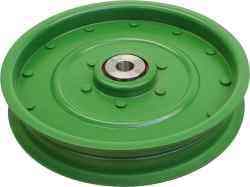
JD5001
Idler Pulley for John Deere - Replaces OEM AH94450
Aftermarket replacement for John Deere OEM AH94450. Review listed machine fitment and request a quote from FieldFit Parts.
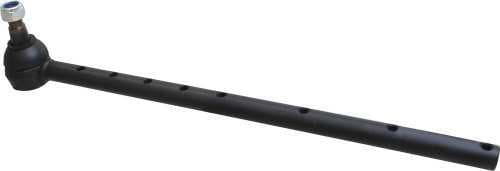
FFP-JD-000016
2WD Steering Tie Rod Assembly for John Deere - Replaces OEM AH231494
Aftermarket replacement for John Deere OEM AH231494. Review listed machine fitment and request a quote from FieldFit Parts.

FFP-JD-000017
Bearing for John Deere - Replaces OEM JD7689
Aftermarket replacement for John Deere OEM JD7689. Review listed machine fitment and request a quote from FieldFit Parts.
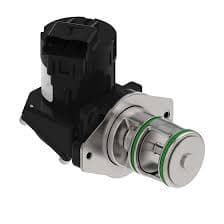
FFP-JD-000021
Recycling Valve for John Deere - Replaces OEM DZ111267
Aftermarket replacement for John Deere OEM DZ111267. Review listed machine fitment and request a quote from FieldFit Parts.
JD5191
Tine for John Deere - Replaces OEM KXE10048
Aftermarket replacement for John Deere OEM KXE10048. Review listed machine fitment and request a quote from FieldFit Parts.
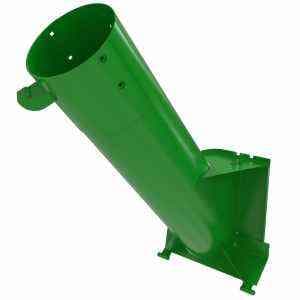
FFP-JD-000020
Auger Tube for John Deere - Replaces OEM AH219093
Aftermarket replacement for John Deere OEM AH219093. Review listed machine fitment and request a quote from FieldFit Parts.

FFP-JD-000019
Roller Chain for John Deere - Replaces OEM AXE54619
Aftermarket replacement for John Deere OEM AXE54619. Review listed machine fitment and request a quote from FieldFit Parts.