OEM vs. Aftermarket Combine Parts: What Is the Real Difference?
Compare OEM and aftermarket combine parts by fitment evidence, construction, support, warranty terms, cost, and supply risk.
Quick Answer
OEM combine parts are supplied under the original equipment manufacturer's parts system.
Aftermarket combine parts are produced by independent manufacturers for use as replacements in compatible equipment.
Neither category is automatically better in every situation.
The right choice depends on the component, fitment certainty, quality of the replacement, machine age, availability, cost, and how much downtime you can tolerate.
What Does OEM Mean?
OEM stands for Original Equipment Manufacturer.
If you own a John Deere combine, a genuine part supplied through John Deere's parts network is an OEM part.
The same principle applies to Case IH, New Holland, CLAAS, and other manufacturers.
OEM parts offer one major advantage:
The part is integrated into the manufacturer's own parts and equipment system.
If the OEM catalog identifies the exact component for your machine and serial number, fitment identification is usually straightforward.
What Is an Aftermarket Combine Part?
An aftermarket part is manufactured and sold outside the original equipment manufacturer's branded parts channel.
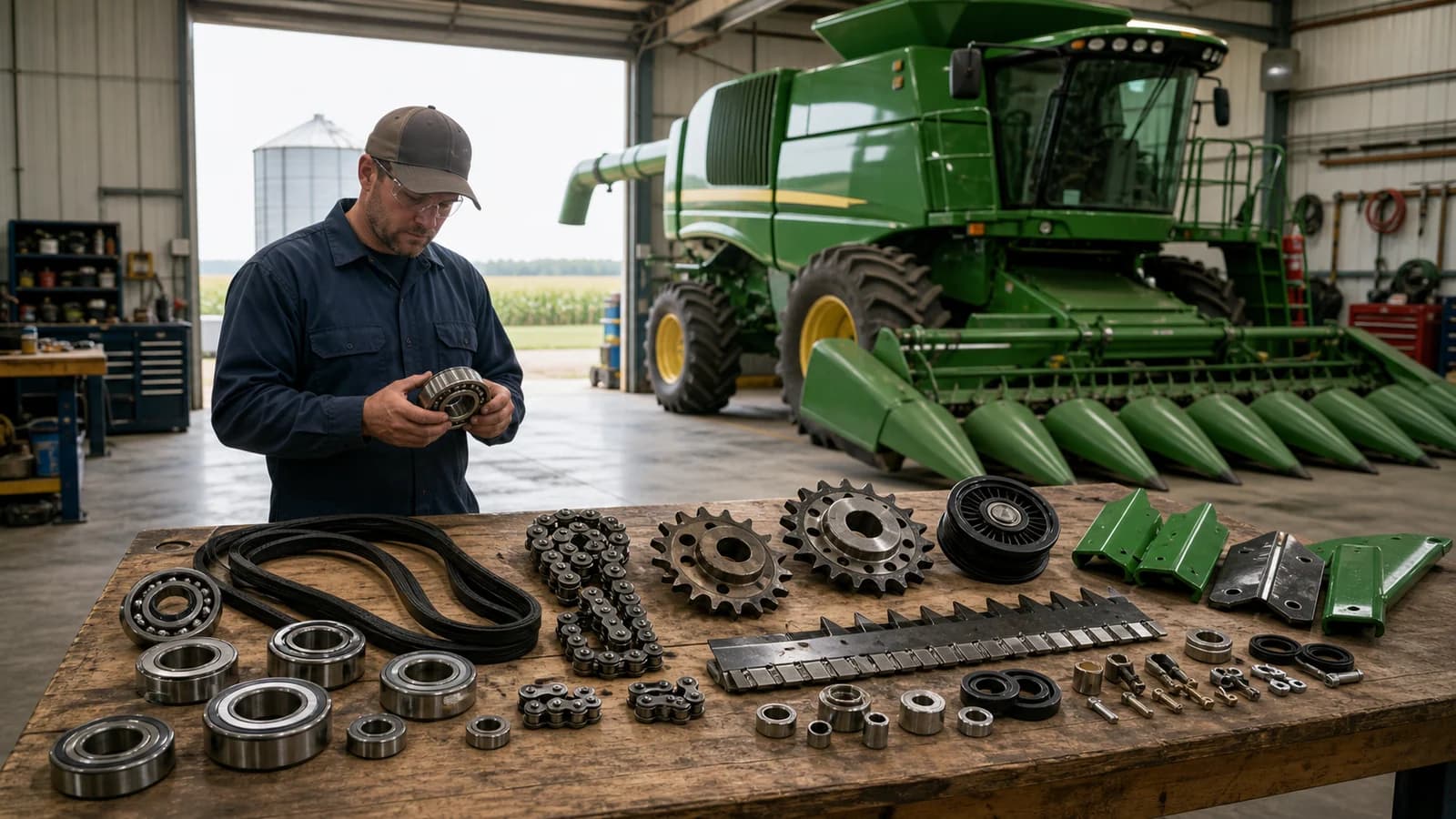
Examples can include:
- bearings
- sprockets
- idlers
- feederhouse parts
- elevator chains
- knife sections
- guards
- bushings
- seals
- auger fingers
- reel fingers
- pulleys
- rotor components
- concaves
- electrical components
The agricultural aftermarket is not unusual or niche. Established U.S. suppliers sell extensive aftermarket replacement lines for John Deere, Case IH, New Holland, Massey Ferguson and other harvesting equipment.
Is “Aftermarket” the Same as “Counterfeit”?
No.
These terms should not be confused.
A legitimate aftermarket product is sold under its own manufacturer's or supplier's identity and is described as being compatible with or replacing a referenced OEM part.
A counterfeit product falsely represents itself as a genuine branded OEM product.
Those are fundamentally different things.
A professional aftermarket listing should make that distinction clear.
For example:
Aftermarket replacement for OEM reference recorded OEM number
is different from claiming:
Genuine John Deere recorded OEM number
when the product is not made or supplied by John Deere.
Why Do Farmers Buy Aftermarket Combine Parts?
There are several practical reasons.
1. Price
OEM parts can carry a significant price premium.
For common mechanical wear components, buyers often compare the OEM price with replacement alternatives before deciding.
The bigger question, however, should not be:
“Which part is cheapest?”
It should be:
“Which option gives me acceptable quality and fitment at the lowest total cost?”
A part that is 30% cheaper but fails halfway through harvest is not inexpensive.
2. Availability
Harvest changes the value of time.
When a combine is sitting in the field and weather is approaching, the theoretically “best” part is not very useful if it cannot arrive when needed.
Parts availability is a genuine purchasing factor for farmers. Operators frequently cite local parts support as one reason for choosing a particular combine brand, and aftermarket suppliers emphasize keeping machines moving during narrow harvest windows.
In some situations, the best replacement is simply the dependable part that can reach the machine quickly.
3. Keeping Older Machines Running
There is a large installed base of older harvesting equipment still working.
As machines age, some owners become more price-sensitive, while certain original components become harder to source.
Aftermarket suppliers, rebuilders, salvage yards, and online marketplaces become increasingly important.
Are Aftermarket Parts Lower Quality Than OEM?
Sometimes.
Sometimes not.
“Aftermarket” describes where a part comes from—not a single level of quality.
The category includes everything from established manufacturers with detailed specifications and warranties to anonymous low-cost products with little fitment information.
That is why the better question is:
How do I evaluate this specific aftermarket part and supplier?
Seven Things to Check Before Buying an Aftermarket Combine Part
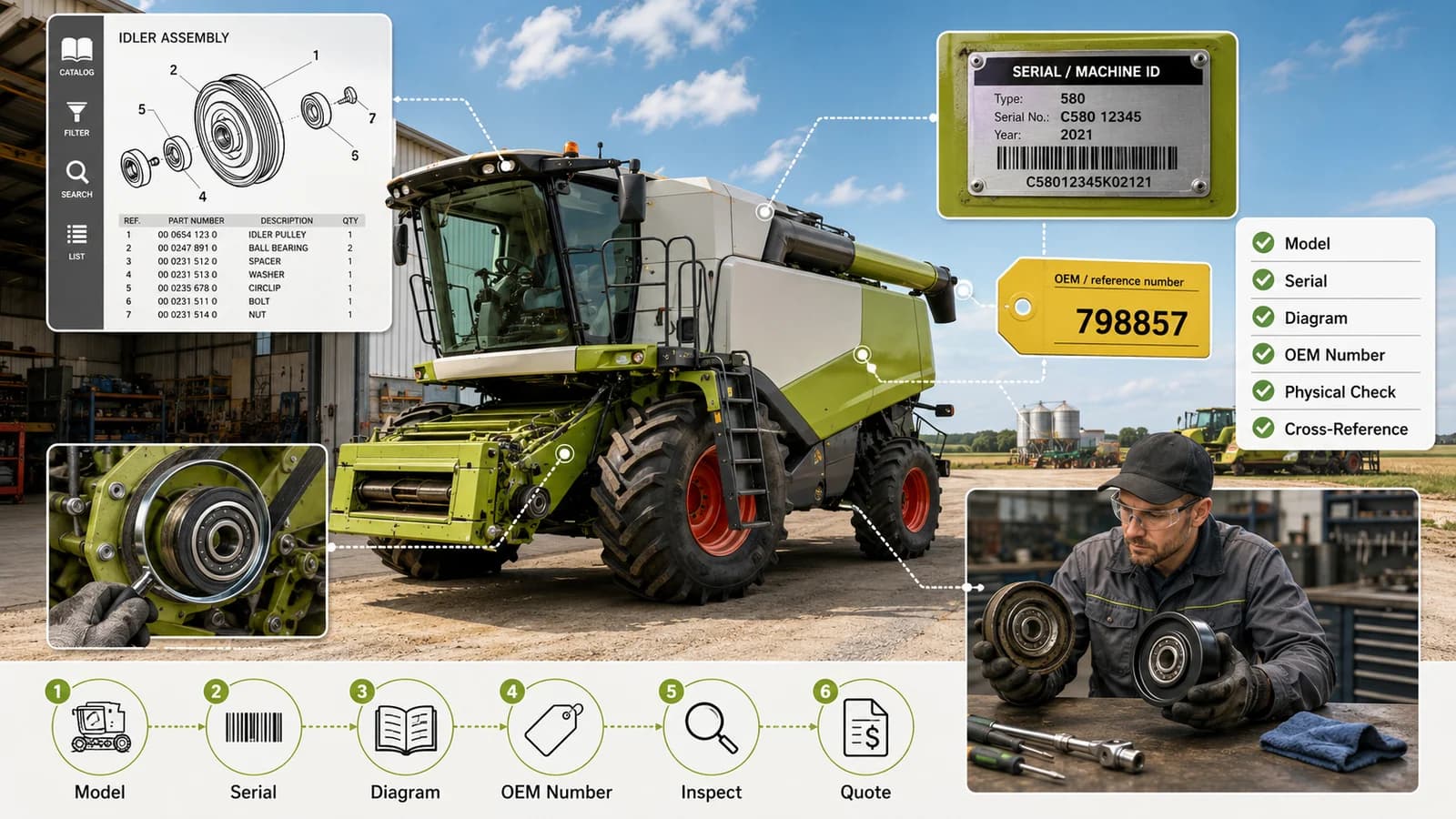
1. OEM Cross-Reference
The listing should clearly identify the OEM number or numbers the product is intended to replace.
If a seller cannot tell you what OEM reference the component crosses to, fitment becomes harder to verify.
2. Machine Fitment
Look for specific models.
Better:
Fits John Deere S660, S670, S680
Worse:
Fits John Deere combines
Best:
A structured model list plus applicable serial-number information.
Established aftermarket suppliers commonly present an OEM reference alongside a machine-fitment table for exactly this reason.
3. Critical Dimensions
This matters especially for:
- bearings
- sprockets
- shafts
- bushings
- pulleys
- seals
- chains
- couplers
Check whatever dimensions determine function.
For example:
A sprocket can have the correct outside appearance but the wrong bore or tooth count.
4. Material and Construction
Some wear parts are highly dependent on material quality and heat treatment.
Ask appropriate questions.
Examples:
- Is the sprocket hardened?
- What material is the wear plate?
- What is the chain specification?
- Is the bearing sealed or shielded?
- What material is the knife section?
- Is the rotor component hardened or coated?
A professional seller may not publish a metallurgy report for every $20 part, but it should understand what it is selling.
5. What Is Included?
Never assume.
A “bearing assembly” might contain:
- bearing only;
- bearing plus flange;
- bearing plus locking collar;
- bearing plus housing and hardware.
A repair kit may or may not include seals, bolts, clips, or retainers.
Look at the product photograph and package contents.
6. Warranty and Support
Warranty alone does not prove quality.
But a supplier willing to identify the product, publish fitment details, and stand behind it is preferable to one that disappears after checkout.
7. Fitment Support
One of the most valuable signs is simple:
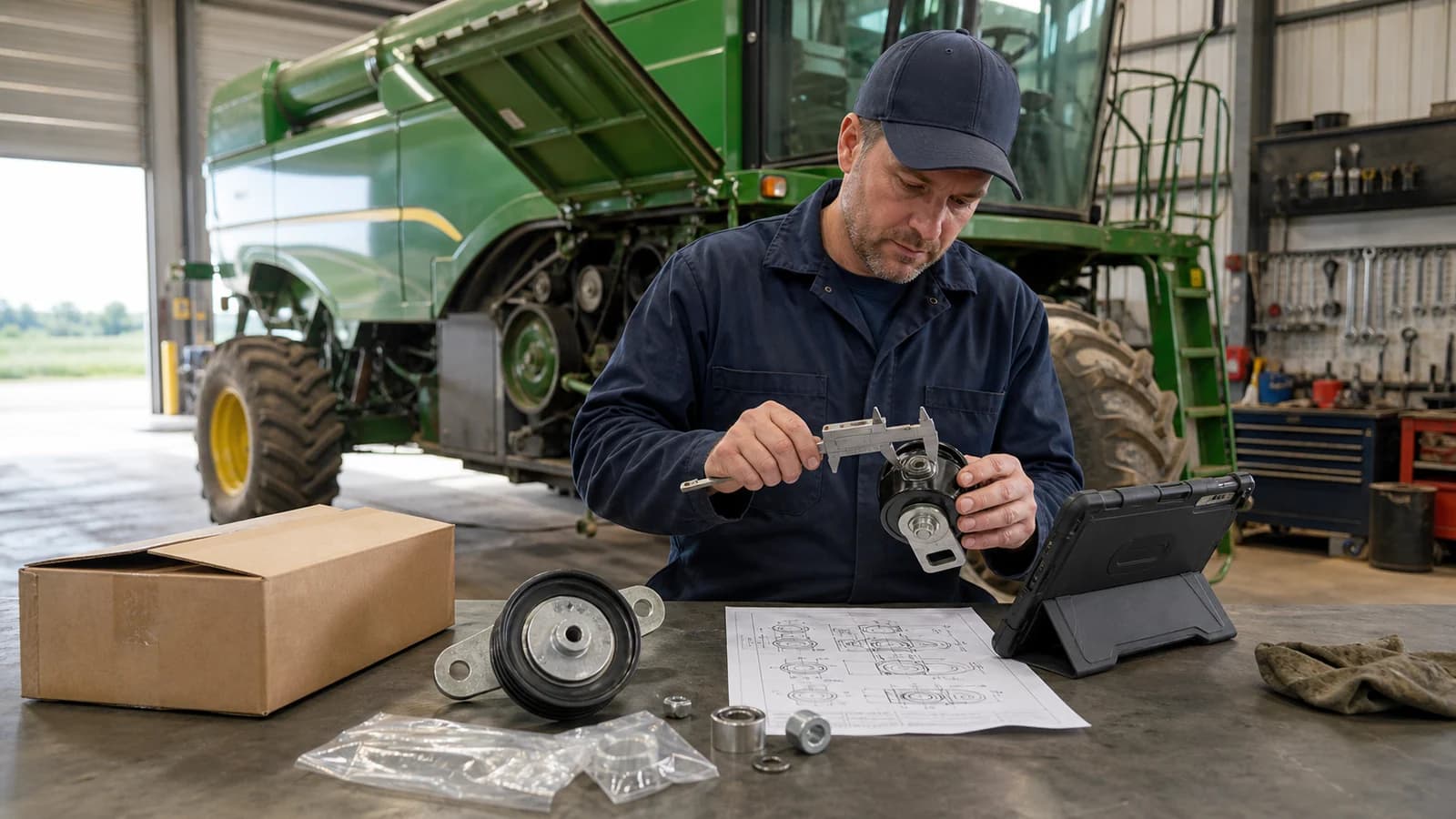
Can you send the supplier your OEM number, machine model, serial number, and photos and receive a meaningful answer?
If yes, you are dealing with a parts supplier.
If every question receives:
“It should fit.”
you may be dealing with a listing operator.
There is a difference.
When Does Aftermarket Make the Most Sense?
Aftermarket parts are particularly attractive for many common mechanical wear items where specifications and fitment can be clearly identified.
Examples include:
- knife sections
- guards
- reel fingers
- auger fingers
- bearings
- bearing housings
- bushings
- seals
- idlers
- sprockets
- pulleys
- chains
- feederhouse components
- clean-grain elevator components
These are exactly the kinds of high-wear parts routinely carried by aftermarket agricultural suppliers.
When Might OEM Be the Better Choice?
There are situations where many buyers reasonably prefer OEM.
Examples can include:
Complex electronic components
Controllers, displays, software-related modules, and certain sensors may require more than physical fitment.
Recently released equipment
Aftermarket coverage may still be limited or insufficiently proven.
Components requiring specific calibration
If replacement involves programming, calibration, or proprietary procedures, OEM/dealer support may simplify the repair.
Warranty-sensitive repairs
If the machine or repair is under a warranty program, check the relevant warranty requirements before choosing a component.
Parts where failure carries unusually high secondary damage
Saving $50 is not attractive if a questionable component can create thousands of dollars of additional damage.
Is the Most Expensive Part Always the Safest?
No.
Price alone is not a technical specification.
A more useful decision framework is:
**Fitment certainty
-
Product quality
-
Supplier reliability
-
Availability
-
Delivered cost
-
Consequence of failure**
Think of these factors together.
What About a Combine That Is 10 or 20 Years Old?
This is where the aftermarket often becomes particularly valuable.
Suppose you own a John Deere 9770 STS or an older Case IH 2388.
The machine may still perform the job you need it to perform.
Your goal is not necessarily to restore every component with the most expensive available option.
Your goal may be to keep a proven machine running reliably at a sensible cost per acre.
For a high-wear mechanical component with a clear OEM reference and well-established aftermarket equivalent, an aftermarket replacement can be a very rational choice.
Should I Buy the Cheapest Aftermarket Part I Can Find?
Usually not.
Agricultural parts are not phone cases.
Downtime matters.
During harvest, the real cost of a failed $30 part may include:
- lost operating hours;
- labor;
- another service call;
- expedited freight;
- weather exposure;
- lost crop quality.
Evaluate the part against the cost of failure.
A Simple OEM vs. Aftermarket Decision Table
| Situation | OEM | Quality Aftermarket |
|---|---|---|
| Common wear part | Good | Often very attractive |
| Exact OEM number known | Good | Good if cross-reference is verified |
| Older machine | Can be expensive | Often attractive |
| Urgent part availability | Depends on stock | Depends on stock |
| Electronic/control module | Often preferred | Requires extra caution |
| Simple bearing/sprocket/idler | Good | Often attractive |
| Uncertain fitment | Dealer verification helpful | Supplier verification essential |
| Lowest purchase price | Usually higher | Often lower |
| Quality consistency | Generally predictable | Supplier/manufacturer dependent |
Frequently Asked Questions
Are aftermarket combine parts worth buying?
Yes, many are, particularly common mechanical wear parts with clear specifications and fitment. Quality varies, so evaluate the actual manufacturer and supplier rather than assuming all aftermarket parts are equal.
Will an aftermarket part have the same OEM number?
The aftermarket product normally has its own SKU but may reference one or more OEM numbers that it is intended to replace.
Why does one aftermarket part replace several OEM numbers?
Part numbers can change over time, or one component can be used across multiple applications. Always check actual equipment fitment.
Should I use aftermarket bearings and sprockets?
These are common aftermarket categories. Confirm dimensions, specifications, quality, and fitment before buying.
Is OEM always better during harvest?
Not necessarily. A quality component that fits correctly and is available immediately may be more useful than an unavailable part. The consequence of failure should still guide the decision.
Continue your parts research
Use the John Deere cross-reference workflow when a Deere OEM number is your starting point.
For Case IH equipment, follow the Case IH combine fitment guide.
Before checkout, apply the seven combine-part fitment checks to the candidate part.
For a reviewed sourcing response, submit a replacement-part quote request with the OEM number and machine details.
Bottom Line
The real comparison is not:
OEM good. Aftermarket bad.
Nor is it:
Aftermarket cheap. OEM overpriced.
The better question is:
“What is the most dependable, correctly fitting, economically sensible way to get this machine back into the field?”
For many mechanical wear parts, a properly identified aftermarket replacement can provide excellent value.
Start with the OEM number.
Confirm the machine.
Check the specification.
Then choose the supplier—not just the price.
Official references
John Deere, Case IH, New Holland, CLAAS, and their model names are trademarks of their respective owners. FieldFit Parts is not affiliated with or endorsed by those manufacturers. OEM numbers and model names are used for identification and compatibility reference only. Confirm the current official catalog record, written warranty terms, and the machine's actual configuration before ordering or installing a replacement part.
Continue to the catalog
Related Combine Parts Catalogs
Move from lookup guidance to published brand-specific parts. Search by the complete OEM or reference number and confirm the machine details before ordering.
Case IH Combine Parts
Browse published Case IH combine replacement parts by OEM or reference number, then verify model and serial details.
Browse partsPublished catalogNew Holland Combine Parts
Browse published New Holland combine replacement parts by OEM or reference number, then verify model and serial details.
Browse partsRelated Parts
FFP-JD-000015
Sprocket for John Deere - Replaces OEM HXE22458
Aftermarket replacement for John Deere OEM HXE22458. Review listed machine fitment and request a quote from FieldFit Parts.
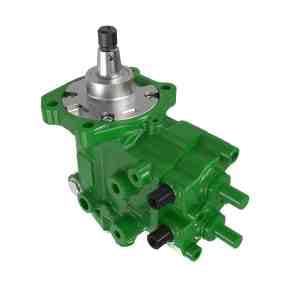
FFP-JD-R01364
Fuel Pump for John Deere - Replaces OEM DZ128160
Quote-only replacement part for OEM DZ128160. Confirm final fitment with your model or original part number.
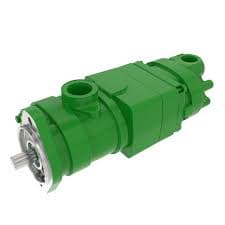
FFP-JD-R01427
Hydraulic Pump for John Deere - Replaces OEM AXE57337
Quote-only replacement part for OEM AXE57337. Confirm final fitment with your model or original part number.
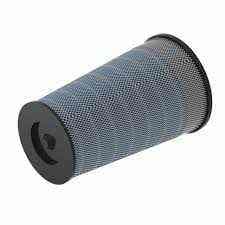
JD5736
Air Filter for John Deere - Replaces OEM AXE42066
Quote-only replacement part for OEM AXE42066. Confirm final fitment with your model or original part number.
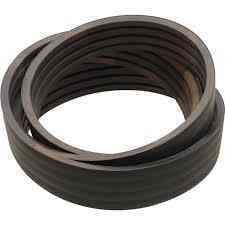
FFP-JD-R01299
Belt for John Deere - Replaces OEM H240888
Quote-only replacement part for OEM H240888. Confirm final fitment with your model or original part number.
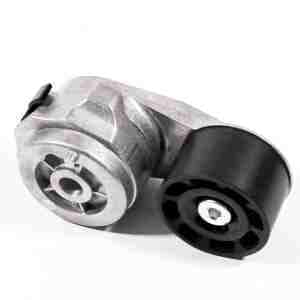
FFP-JD-R01241
Belt Tensioner for John Deere - Replaces OEM RE582501
Quote-only replacement part for OEM RE582501. Confirm final fitment with your model or original part number.
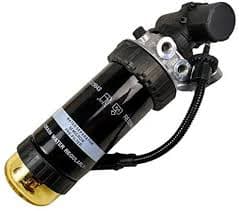
FFP-JD-R01046
Fuel Filter Assembly for John Deere - Replaces OEM RE569926
Quote-only replacement part for OEM RE569926. Confirm final fitment with your model or original part number.