Air & Fuel Filters: Maintenance & Replacement
Learn when to replace air and fuel filters on John Deere and Case IH equipment. Maintenance intervals, fitment checks, and sourcing.
Air and fuel filters protect the engine from the two most common sources of internal damage: airborne particulates and fuel-borne contaminants. A clogged air filter restricts airflow, reduces combustion efficiency, and forces the engine to work harder for the same output. A degraded fuel filter allows water, rust, and fine debris into the injection system, where they cause wear that is expensive to repair.
This guide covers filter maintenance and replacement for John Deere and Case IH equipment. It is intended for operators, maintenance teams, and parts buyers who need to understand replacement intervals, identification methods, and sourcing options for both air and fuel filters.
Why regular filter maintenance matters
A clean air filter allows the engine to breathe at its designed airflow rate. As the filter loads with dust and debris, restriction increases and the engine compensates by reducing power output. On turbocharged diesel engines common in modern tractors and combines, air restriction also affects turbocharger performance and exhaust aftertreatment system operation.
Diesel injection systems operate at high pressures with tight tolerances. Fine particles and water can damage pump and injector surfaces, degrade spray patterns, and promote corrosion or microbial growth in stored fuel. The specified filter stages and water separator are therefore part of the fuel system design, not interchangeable canisters selected by dimensions alone.
Replacing a filter on schedule costs a fraction of the repair bill for a scored injector, damaged injection pump, or contaminated combustion chamber. Consistent filter maintenance is one of the highest-return preventive actions available to any equipment operator.
Air filter basics
Types of air filter media
- Paper or composite elements. Common on agricultural equipment. Unless the machine manual supplies an approved cleaning procedure, replace the element when it reaches its service limit rather than washing or improvising a cleaning method.
- Foam pre-filters. Some systems use a foam outer element to capture larger particles before they reach the primary element. Clean and service it only by the procedure and product specified in the operator's manual.
- Wire mesh (oil bath) filters. Found on older equipment. These use a reservoir of oil to trap particles. They are less common on modern machines but still encountered on legacy tractors.
Restriction indicators
Many machines use a restriction indicator or dashboard warning to show that airflow through the cleaner has reached the service threshold. Follow the machine's procedure for inspecting the housing, intake duct, seals, primary element, and safety element. Do not assume that appearance alone proves an element is serviceable or that every indicator uses the same reset procedure.
Primary and secondary elements
Many agricultural air cleaner systems use a two-stage configuration: a primary (outer) element that captures the majority of particulates, and a secondary (inner or safety) element that provides backup filtration if the primary element is damaged or improperly sealed. The secondary element is replaced less frequently than the primary but should be inspected whenever the primary is changed.
Fuel filter basics
Water separation
Agricultural diesel fuel is often stored in farm tanks exposed to temperature fluctuations that cause condensation. Water separators—either integrated into the fuel filter assembly or installed as a separate stage—collect water before it reaches the injection system. Most water separators include a drain valve that should be checked and drained at regular intervals.
Micron ratings
Fuel filters are rated by particle-capture efficiency, flow, pressure, water-separation performance, and other application-specific properties. A filter with the wrong media or flow characteristics can cause problems even if it physically fits the housing. Match the OEM number or the complete documented specification rather than selecting by a claimed micron rating alone.
Primary and secondary fuel filters
Like air filtration, many fuel systems use a two-stage approach: a primary filter or fuel/water separator that handles larger contaminants and water, followed by a secondary fine-filtration element closer to the injection pump. Both stages must be maintained on their respective schedules.
Recommended replacement intervals
OEM schedules
John Deere and Case IH publish maintenance tables for specific machine and engine configurations. Use the applicable manual, warning indicator, and service notes rather than a universal hour range:
| Filter type | Service decision |
|---|---|
| Primary air filter | Service at the manual-specified interval or restriction indication, using the approved inspection procedure |
| Secondary or safety air filter | Replace only at the specified interval or condition; avoid unnecessary handling |
| Primary fuel filter or separator | Follow the engine-specific interval and water-drain procedure |
| Secondary fuel filter | Follow the engine-specific interval and change procedure for the complete filter set |
| Water separator | Inspect and drain at the frequency stated for the machine and operating conditions |
Record the machine hours, date, filter OEM number, and observed condition at each service. That history helps a shop respond to severe dust or fuel contamination without inventing a second schedule that conflicts with the manual.
Operating condition adjustments
Dusty harvest conditions, sandy soils, and high-residue environments shorten air filter life significantly. Fuel quality issues—water contamination, older fuel, or tank corrosion—similarly shorten fuel filter life. Operators in these conditions should monitor restriction indicators and fuel system symptoms rather than relying solely on hour-based intervals.
Identifying your current filter
OEM numbers and cross-references
Filter OEM numbers are typically printed on the filter housing or element. For John Deere equipment, filter numbers often begin with prefixes like RE, AT, or AR. Case IH filter numbers may include numeric sequences with a brand-specific format. Record the complete number, including any suffix that indicates the filter grade or revision.
For guidance on tracing OEM numbers through official catalogs, see How to Cross-Reference John Deere Combine Part Numbers. The workflow applies to filter elements as well as mechanical components.
Physical dimensions
When a number is unreadable or unavailable, measure the filter element:
- Outside diameter and inside diameter (for cylindrical elements).
- Height (including seal surfaces and end caps).
- Seal type (gasket, O-ring, or radial seal).
- Thread size (for spin-on fuel filters).
- Inlet and outlet port configuration (for inline fuel filters).
These measurements help a supplier narrow the candidate list when the OEM number is unreadable, but they do not replace application, media, flow, and pressure verification.
OEM vs. aftermarket filters
| Factor | OEM filter | Aftermarket filter |
|---|---|---|
| Filtration specification | Matched to the cataloged application | Requires documented media, flow, and application evidence |
| Seal and gasket fit | Cataloged for the housing | Requires documented seal dimensions and material compatibility |
| Cost | Verify the current dealer quote and terms | May be lower; verify the current supplier quote and terms |
| Availability | Depends on part number and dealer stock | Depends on part number and supplier stock |
| Quality consistency | Subject to the OEM's sourcing and validation controls | Varies by manufacturer; request quality and test evidence |
An aftermarket filter is a viable candidate when the supplier documents the OEM cross-reference, media performance, flow capacity, seal interface, and relevant pressure rating. Unknown or incomplete specifications leave material risks that cannot be resolved from exterior dimensions alone.
Seasonal filter changes
Pre-harvest preparation
Before harvest, compare recorded hours and restriction indications with the machine's scheduled service. Replace filters that are due and inspect the air cleaner housing seals, intake ducting, pre-cleaner, fuel separator, and spare-filter inventory. Avoid replacing a safety element early unless the manual or its condition calls for it.
Winter storage preparation
Before long-term storage, follow the machine and fuel supplier's storage procedure; tank level, stabilizer use, and filter service can vary with fuel type and storage duration. Inspect the air cleaner housing for moisture entry and keep replacement elements sealed in clean packaging. For hydraulic systems, contamination management is equally critical—see hydraulic pump maintenance for fluid storage and service interval guidance.
Post-storage inspection
After storage, inspect air filter elements for moisture damage or seal deterioration before starting the engine. Check the fuel system for water accumulation and drain the water separator before the first start of the season.
When to request a quote
If you need filters for multiple machines, older models with discontinued OEM numbers, or want to evaluate aftermarket alternatives, submit a replacement-part quote request with the following details:
- Machine make, model, and serial number.
- Engine model or designation.
- Filter type needed (air primary, air secondary, fuel primary, fuel secondary, water separator).
- Current OEM filter number, if known.
- Quantity needed and any preferred brands.
When selecting replacement filters for multiple machines or older models, consult OEM vs. aftermarket agricultural parts to evaluate cost-quality trade-offs.
For information on related fuel system components, see Fuel Pumps for John Deere and Case IH Tractors.
Official references
- John Deere Parts and Service
- John Deere Maintenance and Support
- Case IH Parts and Service
- Case IH Operator's Manuals
John Deere, Case IH, and their model names are trademarks of their respective owners. FieldFit Parts is not affiliated with or endorsed by John Deere or Case IH. OEM numbers and model names are used for identification and compatibility reference only. Always confirm the current OEM catalog record and the machine's operator manual for filter specifications, maintenance intervals, and installation procedures specific to your equipment.
Related Parts
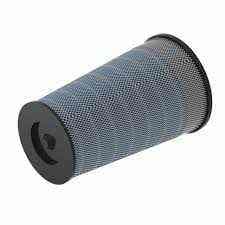
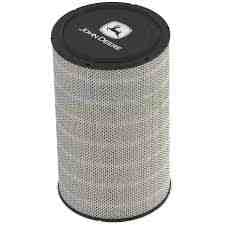
JD5736
Air Filter for John Deere - Replaces OEM AXE42066
Quote-only replacement part for OEM AXE42066. Confirm final fitment with your model or original part number.
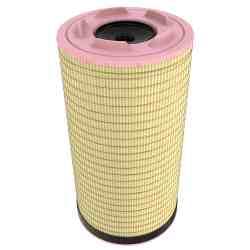
JD5735
Air Filter for John Deere - Replaces OEM AH148880
Quote-only replacement part for OEM AH148880. Confirm final fitment with your model or original part number.
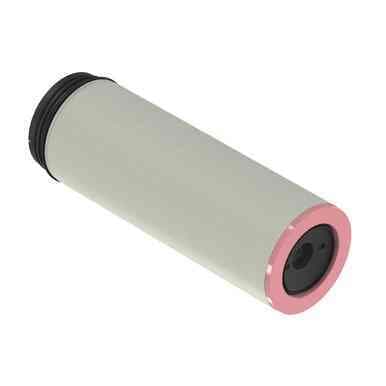
JD5722
Air Filter for John Deere - Replaces OEM AN403918
Quote-only replacement part for OEM AN403918. Confirm final fitment with your model or original part number.
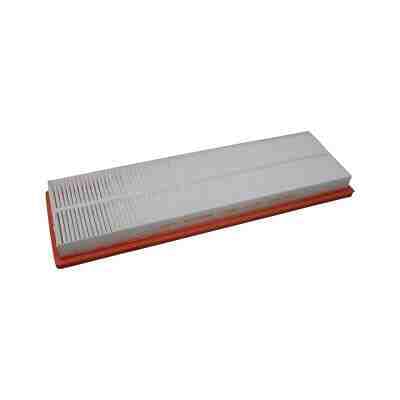
JD5721
Air Filter for John Deere - Replaces OEM AN403919
Quote-only replacement part for OEM AN403919. Confirm final fitment with your model or original part number.
JD5725
Air Filter for John Deere - Replaces OEM RE198488
Quote-only replacement part for OEM RE198488. Confirm final fitment with your model or original part number.
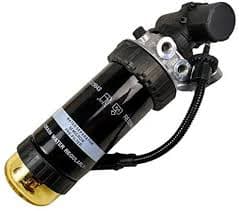
FFP-JD-R01046
Fuel Filter Assembly for John Deere - Replaces OEM RE569926
Quote-only replacement part for OEM RE569926. Confirm final fitment with your model or original part number.
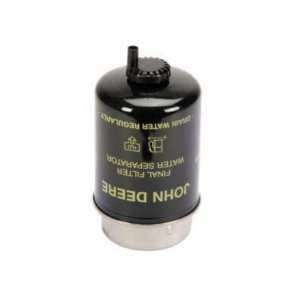
JD5733
Fuel Water Separator Filter for John Deere - Replaces OEM RE62419
Quote-only replacement part for OEM RE62419. Confirm final fitment with your model or original part number.